
This article was not written by a Peace Corps Thailand volunteer currently serving in country.
K.D. Norris, 135 RPCV
The end of Peace Corps service — anytime, anyplace in the world, for whatever reason — is a time of not only reentry but of readjustment.
It is a time of leaving. It is time of returning. It is a time of finding “what’s next” in life. Often, for younger people, what’s next is planned: grad school with a now-focused mind, entering the job market with skills gained, restarting without a plan but with time to figure out what’s next.
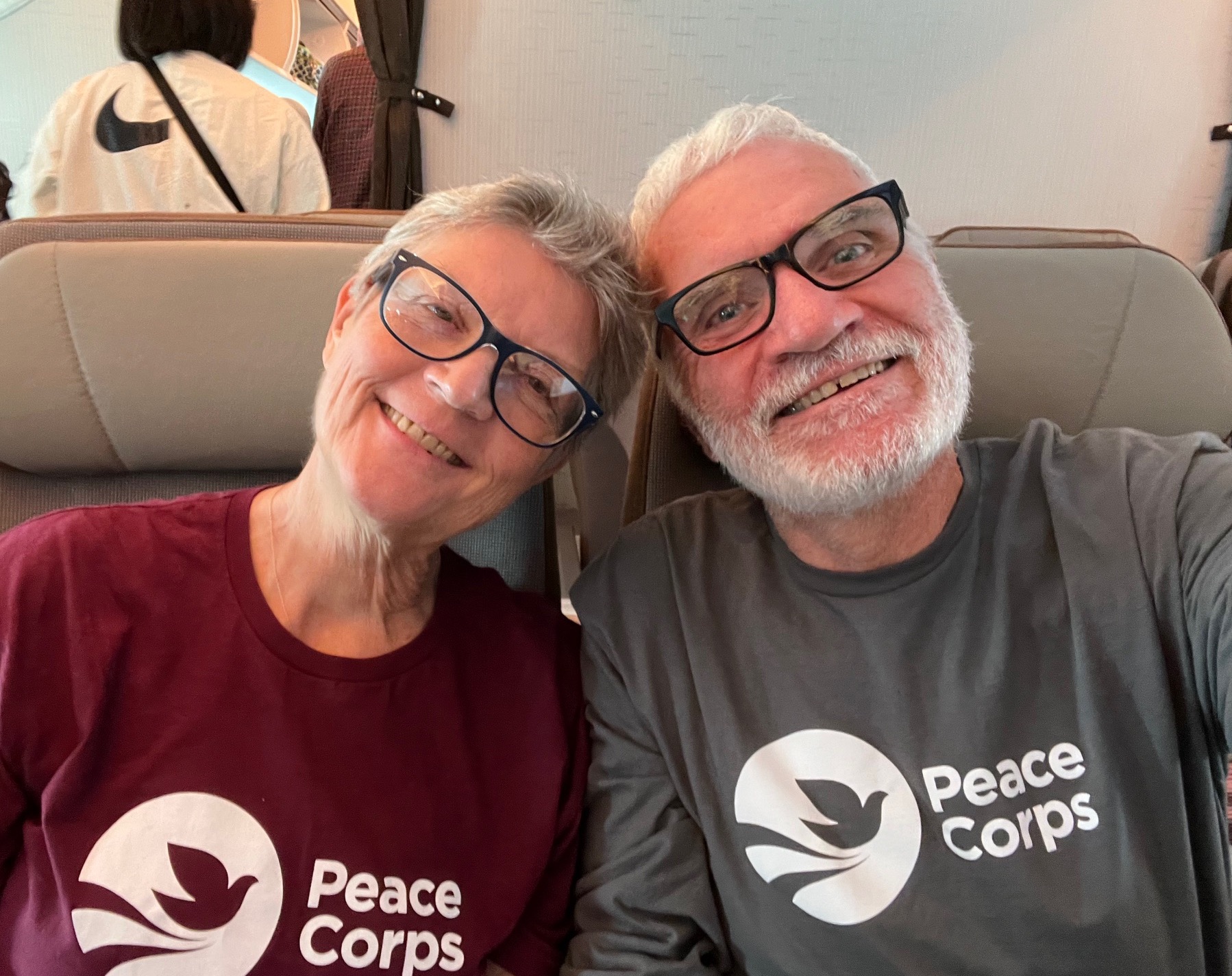
When you are mature volunteers returning, it is both easier and yet, as my wife, TJ, and I have discovered, much more difficult. We found that duality in the weeks since we returned, after repeated loss of family and friends, and changing personal priorities, made it clear that while our hearts were still in Thailand, our immediate future was back in America.
The “easy” part of our return is simple to explain: we have financial and health stability. We already had a plan for when we returned; we just moved up the plan by 9 months. Most importantly, we have each other: before, during, and after our service.
Returning, we mourned the dead, touched base with the living, especially my 86-year-old mother, who I know worried every day about us living half a world away. We rented a car and took a monthlong road trip up the West Coast, in part to visit friends and family, but mostly to focus on our future: where to live, in some ways how to live, as both of us transition from our “working years”, through our “gap years” of Peace Corps service, and into our “retirement years.”
We already knew our retirement years were not going to be us settling into the Barcalounger recliners with a big-screen TV, as evidenced by Peace Corps service being one of the first steps in our retirement plans.
Our transition was made easier by the Peace Corps itself. The personal support of the Peace Corps staff in Bangkok and Washington, D.C., and the continued health coverage transition period gives us time to make good decisions on our future. The extra cash-on-exit payments allowed us to take our road trip and figure out our “what’s next”.
Our transition was also made easier by supportive words, the words of friendship and gratitude and understanding and love, from our Peace Corp Thailand family, our Thai friends and co-workers, and some of our family and friends back in America.
But it was also our family and friends — and America itself — that made our transition harder than we expected, more surreal actually.
We realized that, for us, 18 months had passed with faraway adventures and self-exploration in the Peace Corps. But for our friends, family, and country, these 18 months were filled with life-changing events.
We realized that, for us, time had stood still, but for our family and friends, precious time passed by without us knowing, caring, or being involved.
We also realized that even America had changed while we were gone. We realized that our friends and family — that our nation — had fractured along the Trump/MAGA fault-line. We thought that a disappointing 2024 election result would correct itself without the need for anything more than our absentee ballot votes in 2026. Then we witnessed the pitched ideological street battles across our country, not just in big cities but also in small towns, like the ones we traveled through in Oregon and Washington.
We witnessed an ongoing American nightmare driven by authoritarianism and ignorance on one side, and often passive acceptance on the other. We knew our absentee vote was not enough.
Within days of our arrival in America, for what we initially thought would be a 10-day visit, we realized we could not return to Thailand, to the Peace Corps. It was an agonizing decision. We pride ourselves on being reliable, fulfilling commitments, and now we have to leave our Peace Corps jobs unfinished, our duties unfulfilled. But we made the decision, and — as Oasis sings — “we will not look back in anger” or regret.
Instead, we have a renewed commitment to our family and friends, to community service in our new home, Seaside, Oregon, and our country. In the past, we tended to donate our resources and time in quiet ways: school fundraisers, local food kitchens, shelters for humans and animals. But that may change. We are not normally ones to get involved in petty politics, but we may well need to do so. We are not ones to march in the streets, but we may well need to do so.
Our plan, in the past and hopefully in the future, is to be part of the solution and not part of the problem. That is a big reason we joined the Peace Corps, and that is a big reason why we left the Peace Corps.

“I’m not telling you to make the world better, I’m just telling you to live in it. Not just to endure it, not just to suffer it, not just to pass through it, but to live in it. To look at it. To take chances. To make your own work and take pride in it.”
— Joan Didion
 Sticky Rice
Share your thoughts