
Tucker Strauch, 136 YinD
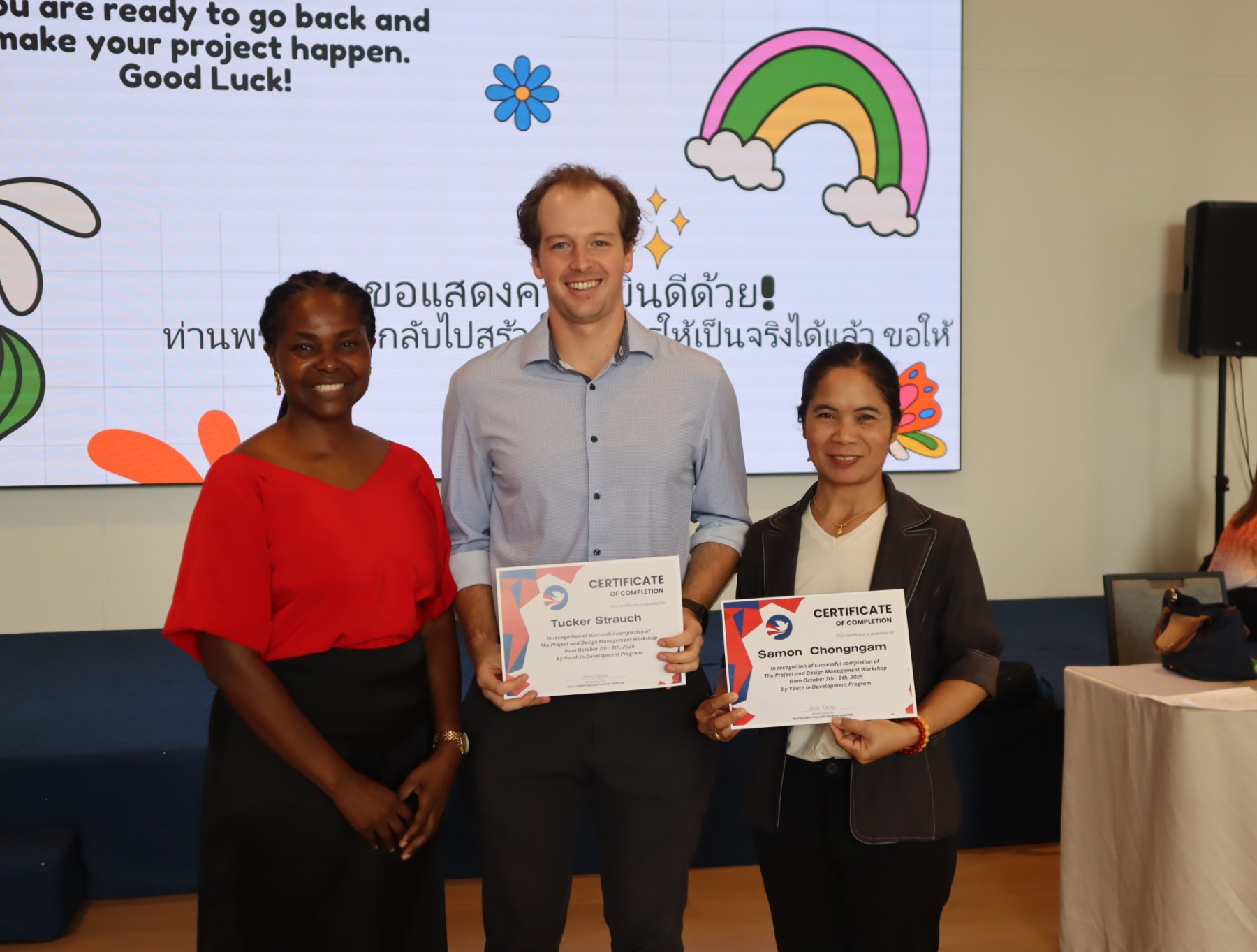
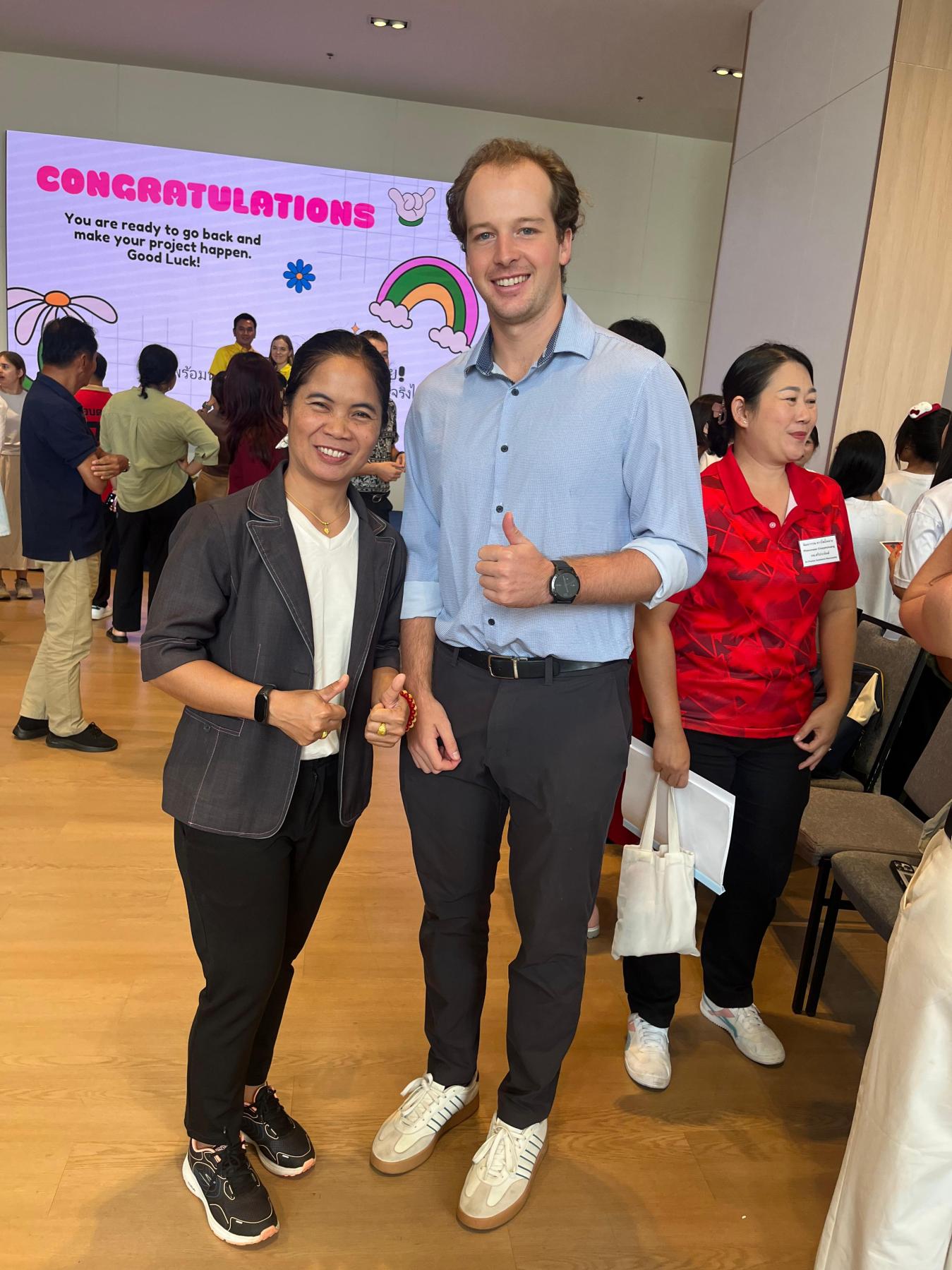
I’m sitting in an overchilled conference room in Bangkok figuratively banging my head against the wall. Next to me is Samon, the director of one of my schools. Around us, 20 other volunteers sit beside their Thai counterparts casually chatting in a mix of Thai and English, highlighting just how far we have come since our first meeting seven months ago. At this conference, Project Design Management (PDM), we and our counterparts were tasked with designing and planning a grant proposal that we aim to implement within our communities. Why was it proving so difficult to plan a project that Samon and I were both excited about? Even though we were managing the mix of Thai and English just fine, it was clear that communication entails far more than simply speaking the same language.
Before our trouble began, the conference felt promising. While not my primary counterpart, I chose to invite Samon because of her positive energy and her community development priorities which I felt were well suited for a conference of this nature. The workshop was a chance to let the creative wheels turn alongside my Thai counterpart, with Peace Corps staff there to guide the process. Throughout the first seven months at site, I had come up with a few possible grant project ideas that I was excited to workshop with Samon. The first exercise of the conference was to draw our ideal communities as a pair. It was a mind-mapping activity intended to formulate a vision based on the problems or deficits that we had perceived in our communities. Our vision seemed to illustrate several opportunities for growth that we both agreed were pertinent. The next activity required us to narrow in on a possible grant project that addresses the community deficit. That is where things got a little more challenging.
As a potential grant project, Samon was immediately drawn to a sports and music camp that would include youth, parents, and community elders. I liked the idea, and it was amazing to see her so engaged. Although I wanted to prioritize youth leadership, and I was having trouble envisioning it in our community, we went ahead with it anyway. Then, we had to outline our project objectives, outputs, and outcomes (already a bit conflated), and I felt we had hit a wall. We had become incapable of communicating effectively with each other. Every single thought that I wanted to express became excruciatingly painful, in large part due to the language barrier, but also because I didn’t know how to disagree in a way that preserved both her idea and our relationship. I was not frustrated with Samon so much as I was frustrated with my own inability to communicate. Throughout that exhausting day, I became more and more dejected regarding the prospect of myself working with any of my Thai counterparts at site to plan and facilitate a project from start to finish.
Coming into the Peace Corps, I expected communication to be one of the hardest and most important aspects of my service. What I didn’t anticipate was how much of that difficulty would stem not just from communicating in a new language, but from Thai cultural norms surrounding hierarchy and indirectness. Throughout my time in Thailand, these three elements of communication have been particularly hard to master.
- High-context culture
In Thailand, meaning is conveyed through tone and body language as opposed to the United States, where not ‘beating around the bush’ is the norm. This indirect way of communicating is known as high-context communication. The indirectness in Thai communication becomes particularly noticeable when disagreements arise.
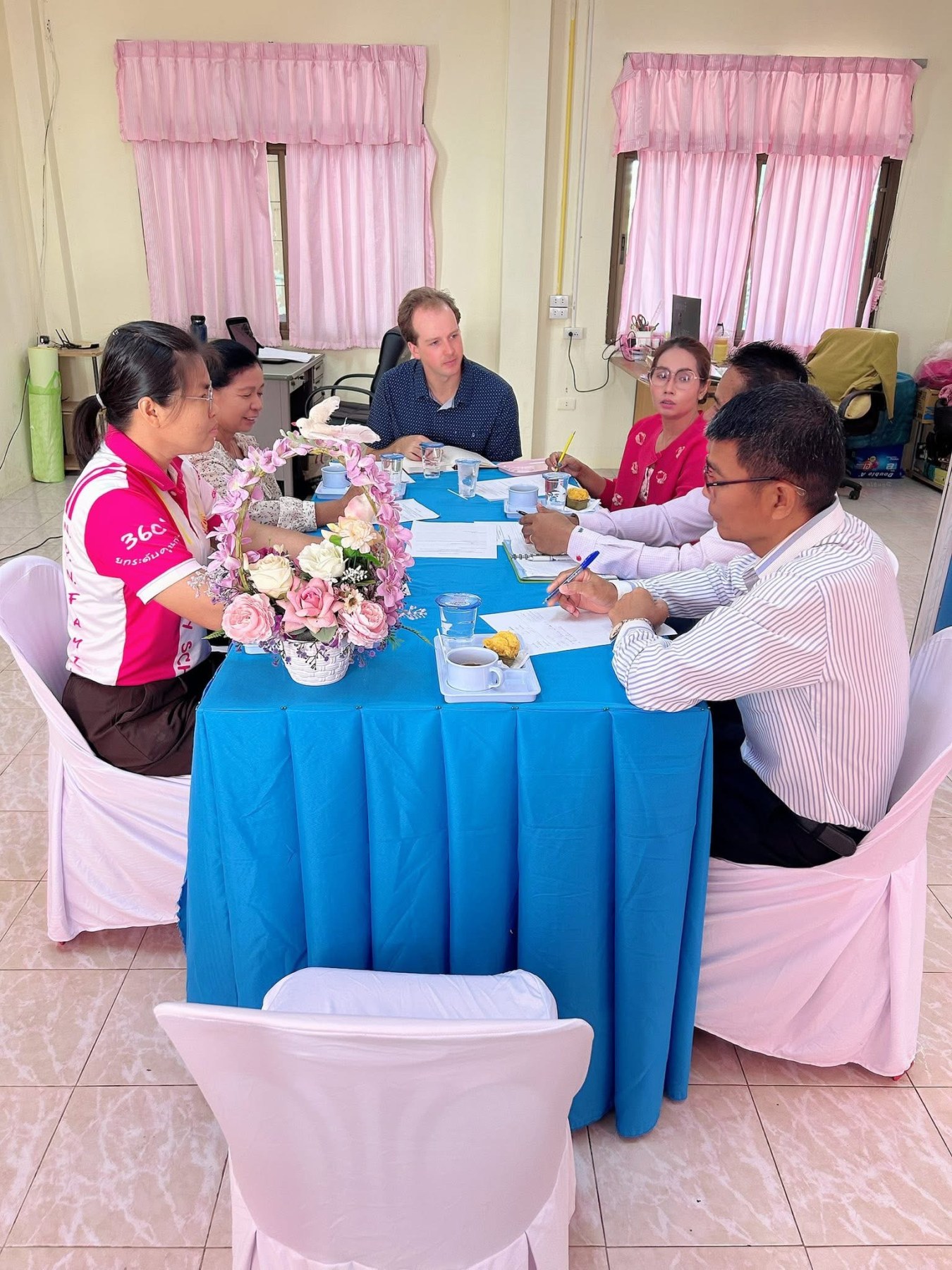
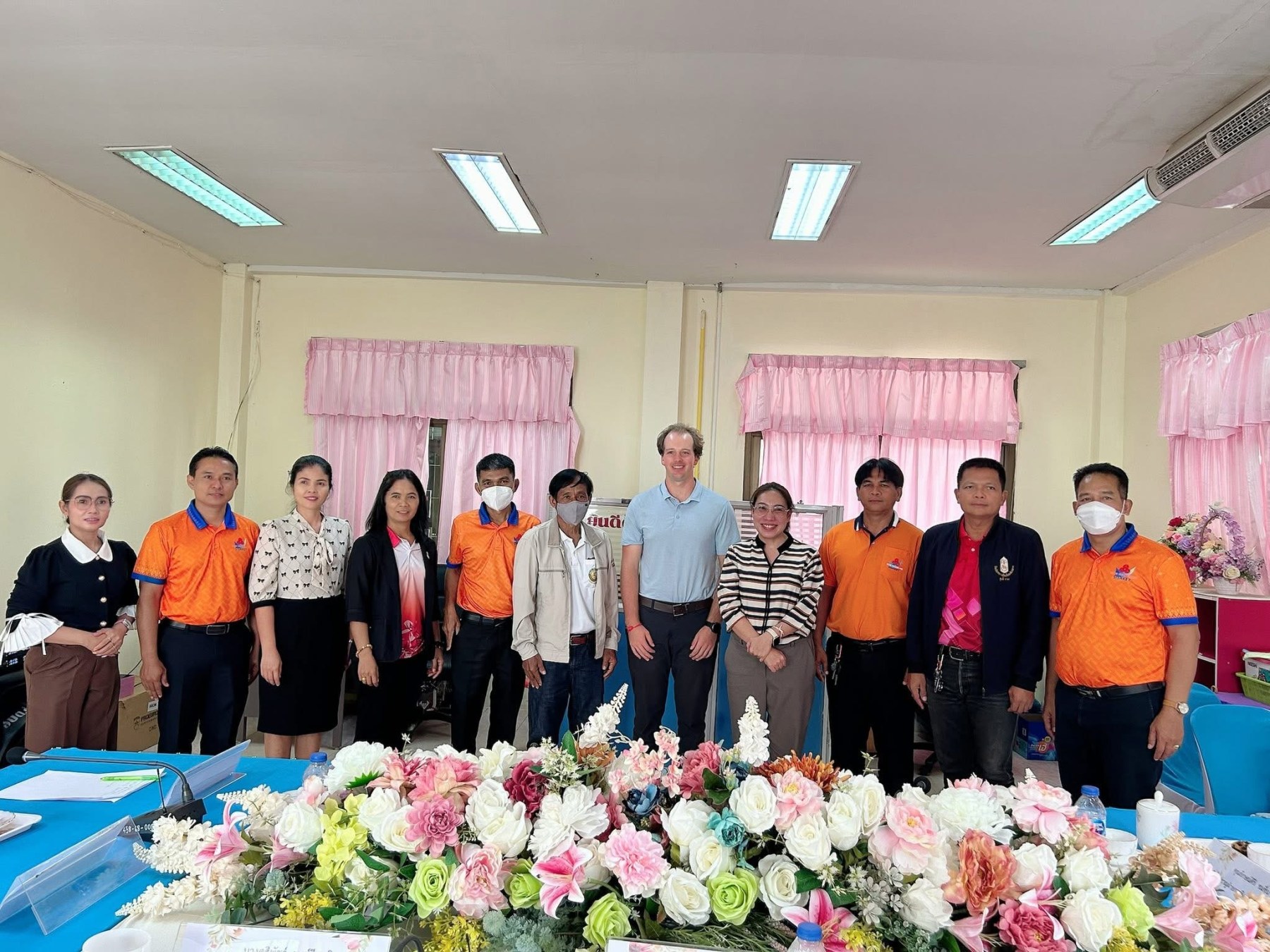
In between my first and second semesters, I wanted to make some changes to my teaching schedule. Basically, I wanted to add a fifth school, while cutting down on the time spent teaching 1st-3rd graders at my other schools (since they take up significant energy and are not in my target age range). My counterpart organized a meeting with all of my school directors so that I could outline my ideal schedule and my reasons for wanting to make the scheduling changes. I realized it was a little bit of a tense request because it necessitated decreasing teaching time at some schools and my perfectly fair balance would be disrupted. In the meeting, the directors suggested a counter-schedule that seemed to completely disregard my preferences. Then they turned to me and asked, “is it okay?”. I felt like I had so much to say, but I didn’t know how to say it. In the U.S. I might have stated my preferences plainly, but in this situation I had to soften them and find a way to carefully express disappointment while also accepting the schedule laid out by my superiors. Furthermore, because all of the directors were also being subtle with their preferences, it proved challenging trying to determine what they felt strongly about and what could be negotiated. Especially in the workplace, Thailand’s high-context communication style can make trying to interpret and convey true preferences a frustrating endeavor.
- Social Hierarchy
Often related to the high-context communication style, Thailand’s social hierarchy plays a leading role in everyday interaction and communication. Age and profession shape daily interactions in ways that are both subtle and deeply ingrained. Even the difference of a couple of years in age determines greetings, pronouns, and expectations. Elders are granted deference because age is associated with wisdom. Certain professions, such as monks, doctors, political leaders, and school directors, carry additional status because the knowledge necessary for their professions translates to moral authority. In the U.S., a social hierarchy certainly exists, but disagreements with superiors are more normalized and sometimes solicited. In Thailand, however, communication is shaped by the understanding that harmony and respect must be preserved above all else, especially when interacting with a higher-status individual.
I experience this difference in communication norms with something as simple as saying “no.” One of my school directors, somebody who I feel close with, goes out of his way to include me in his daily routines. He arranges for me to eat lunch with him at school every day. He invites me up to his office during my free period to play Thai instruments. He calls across campus, “C’mon Tucker, come paint.” I know that these are gestures of generosity, and, the vast majority of times, I say yes and am thankful that I do. However, on the days when I already have plans, or simply want to eat lunch with the other teachers instead, declining feels more uncomfortable than it would back home.
In the Thai workplace, saying yes maintains the relationship and shows respect, so it’s usually the preferred route. During the times when I want to say no, I am hesitant because I feel like I am rejecting not just the request, but the person. I haven’t yet mastered the ‘art of the Thai no,’ but, with careful wording and a gracious tone I am becoming more comfortable in giving a respectful decline.
- Language Barrier
The language barrier is the most obvious communication challenge in Thailand. While I am happy with my Thai level relative to the amount of time that I have been learning the language, it is often still very challenging to communicate about projects or to express emotions in this second language. I have enough vocabulary to confidently discuss my ideas and even my intended outcomes. It becomes tricky, however, when I have to adjust my tone for hierarchy and imply disagreement rather than state it outright all in Thai. At the PDM conference, Samon and I were discussing the music and sports camp, and she was set on making the camp a large community-wide event. I loved the idea and I agreed with her that an objective of the camp should be to engage the entire community in some way; however, I wanted to start small and engage just the students and camp leaders first before including other community members. The challenge was navigating disagreement across hierarchy and culture –all in a language I am still learning.
After that first day in the over air-conditioned room with my school director, things went more smoothly. We found agreement on the project and we became more accustomed to each others’ communication styles. On the last day, we had the chance to present the elevator pitch of our grant proposal to the rest of the group. In a combination of English and Thai we successfully showcased a project that we had co-planned despite cultural and language barriers.
Even in one’s first language, working as a team, each member with their own preferences and communication styles, all moving towards a common goal, rarely comes easily. When one adds a language barrier and cultural communication differences, the challenge to accomplish any task as a team multiplies. Throughout the rest of my service, misunderstandings, unaligned objectives, and moments of frustration are bound to occur. Turns out, learning a new language is the easier part; learning how to read and speak between the lines is the real challenge. But slowly, through each conversation, I am learning.
 Sticky Rice
Share your thoughts